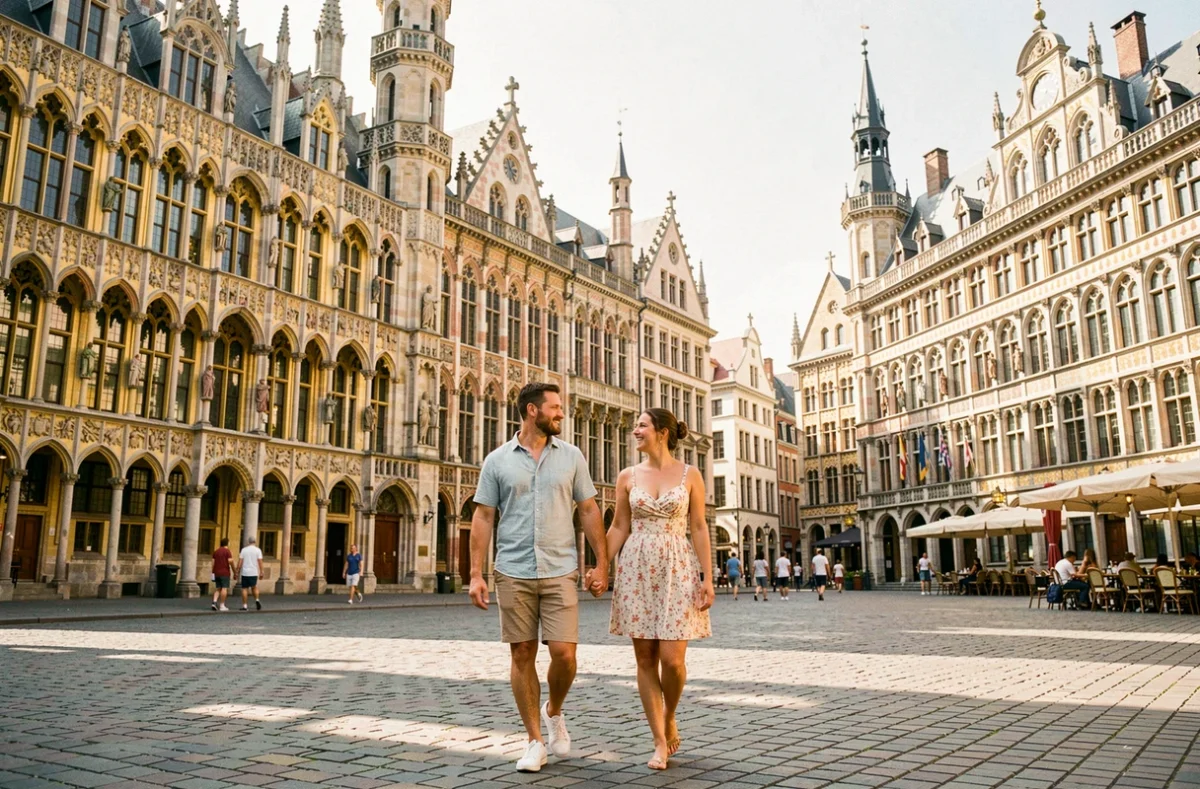
Brussels receives several million tourist overnight stays each year, but the majority comes from business travelers. Leisure stays remain proportionally minor, which places the Belgian capital in a unique category among major European cities: that of destinations where one can move around easily, where queues are rare, and where hotel prices remain moderate outside of conference peaks.
Low Emission Zone in Brussels: What Changes for Tourists Driving
Before planning a drive to Brussels, one regulatory point deserves attention. Since January 1, 2026, Euro 5 diesel cars and vans as well as Euro 2 petrol vehicles are no longer allowed in the Brussels low emission zone. The rule also applies to vehicles registered abroad.
Camera checks are in place throughout the zone. Fines are sent directly to the owner’s home, including for French or Dutch plates. Specifically, if your vehicle is a diesel from before 2015, check its Euro standard before you leave.
The simplest alternative remains the train. From Paris, Brussels-Midi can be reached in just over an hour by Thalys (renamed Eurostar). From Lille, the journey takes about thirty minutes. This rail accessibility also allows for combining several Belgian cities (Ghent, Bruges, Antwerp) in one trip, without ever renting a car. Resources like brusselssunshine.eu detail mobility options and possible routes on site.

Family Holidays in Brussels: Parks and Museums Without the Parisian Crowds
The comparison with Paris is striking for families with children. The major Brussels museums (Museum of Natural Sciences, Belgian Comic Strip Center, Magritte Museum) have very short waiting times, even on weekends. Entry costs significantly less than in equivalent Parisian institutions.
In terms of green spaces, the city has several large parks. The Bois de la Cambre and the Soignes Forest, on the southern edge, offer nature walks just a few tram stops from the center. For children, the Cinquantenaire Park combines lawns, a playground, and immediate proximity to the Autoworld museum.
An Urban Pace Suited for Children
Brussels operates at a different pace than saturated tourist capitals. The sidewalks are wide, there are many terraces, and most restaurants welcome children without extra charges or disapproving looks. Friteries, street waffle makers, and chocolatiers create a culinary journey that younger visitors enjoy just as much as adults.
Weekend in Brussels: Budget and Value for Money Compared to Other European Capitals
For a two-night weekend, the accommodation budget in Brussels remains significantly lower than in Paris, Amsterdam, or Rome. Three-star hotels in the city center offer more accessible rates, especially on weekends when business travelers free up rooms.
Business overnight stays accounted for more than half of total attendance in 2025. This imbalance has a direct advantage for leisure tourists: on Friday and Saturday nights, hotel availability is abundant and prices drop.
- Accommodation: weekday rates are driven up by professional clientele, but drop on weekends in most central neighborhoods.
- Dining: a full meal in a traditional brasserie (mussels and fries, carbonnade) costs a moderate price compared to equivalent dishes in Paris or Rome.
- Transport: a daily STIB pass covers the entire network (bus, tram, metro) for a few euros, and the city is easily explored on foot.
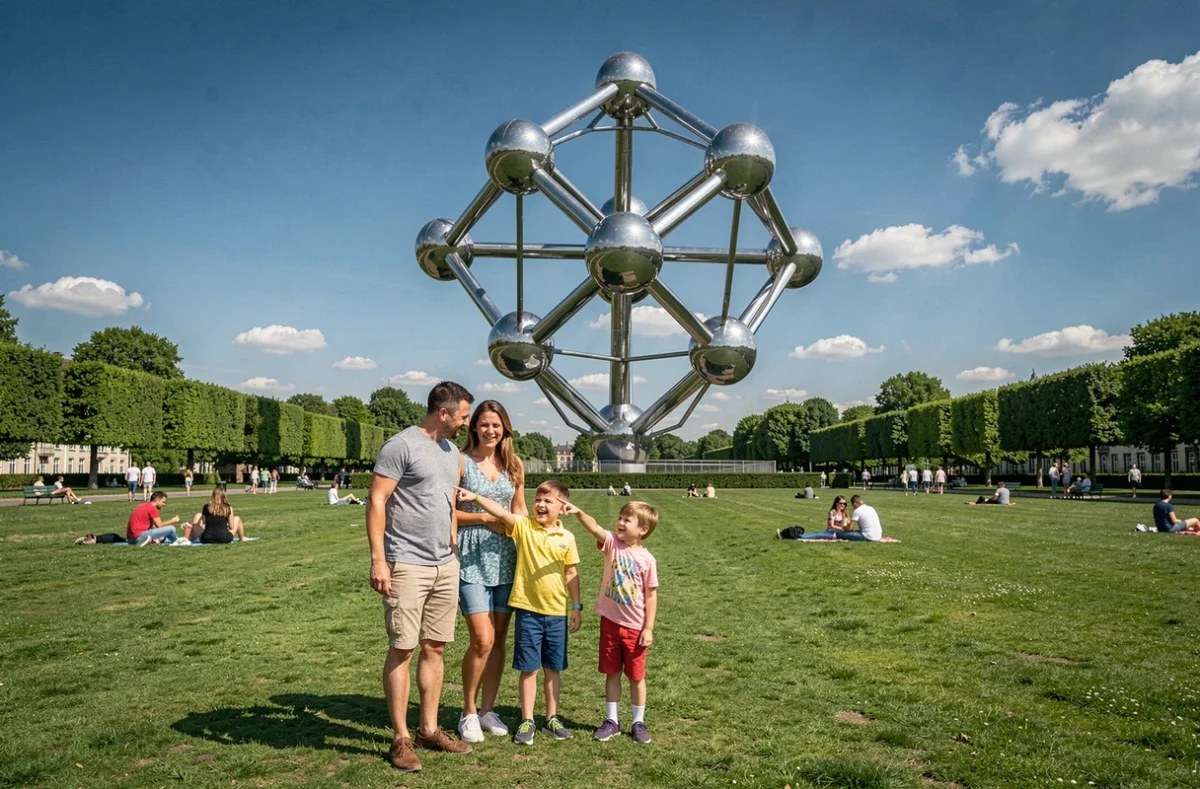
Brussels Weather in Summer: What to Expect
The title of this article mentions sunny holidays, and the question deserves an honest answer. Brussels is not a guaranteed full-sun destination. The climate is temperate oceanic, with mild summers and frequent but short showers.
In practice, the months from June to August offer the best conditions. Temperatures regularly exceed twenty degrees, days are long, and evenings on the terrace remain pleasant. The city hosts several outdoor events during this period, including the traditional car-free Sunday in September, which transforms the capital into a giant walking area.
Sunshine as a Relative Asset
Compared to Mediterranean destinations, Brussels does not compete in terms of sunshine hours. Compared to other northwestern European capitals (London, Amsterdam, Dublin), it falls within the same climate range, with the advantage of being more compact and less saturated with tourists in high season.
Choosing Brussels for a summer holiday thus relies less on the promise of a permanently blue sky and more on a balance between cultural discovery, gastronomy, and accessibility. It is a city where one can walk without exhaustion and eat well without breaking the bank.
Each neighborhood retains a distinct identity (Marolles, Sainte-Catherine, Flagey, Ixelles). The sun, when it is present, is a bonus. The rest of the time, museums, estaminets, and covered galleries take over without diminishing the interest of the stay.