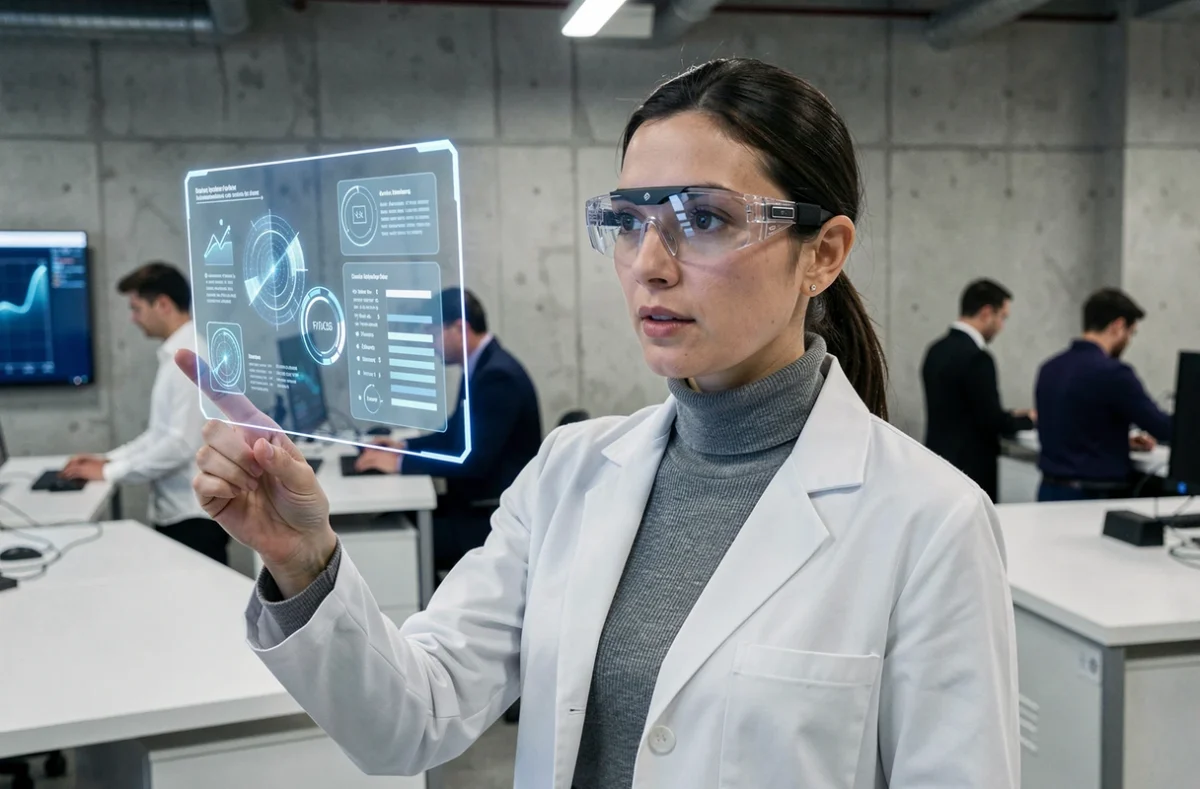
The year 2024 has reshuffled the cards in the technology sector. With the acceleration of generative artificial intelligence, the implementation of European regulations, and the finalization of quantum security standards, innovations are no longer confined to research laboratories. They are already changing how businesses operate and how data flows.
Post-quantum cryptography: standards published as early as 2024
Have you heard about the threat that future quantum computers pose to current encryption? The problem, which was theoretical for a long time, took a concrete turn in 2024.
In August 2024, NIST published its first post-quantum cryptography standards. These algorithms are designed to withstand attacks from both classical computers and quantum machines. For organizations, the migration to these new standards is becoming a top priority, especially for data that must remain confidential over long periods.
A company that stores medical records or industrial secrets must now identify which systems rely on vulnerable encryption. The goal is not to replace everything overnight but to map the risks and plan the transition. The technological news covered on the tech page of Contre Informations provides a regular overview of these security developments.

European regulation on artificial intelligence: what changes concretely
Generative AI dominated tech conversations in 2023. In 2024, it is the regulatory framework that takes over. The European AI regulation came into effect on August 1, 2024, with obligations that apply in gradual phases.
This text, Regulation (EU) 2024/1689, classifies AI systems by risk level. An automated CV sorting tool will not be subject to the same constraints as an entertainment chatbot. Applications deemed high-risk will need to comply with transparency, technical documentation, and human oversight requirements.
What this means for businesses
For a small to medium-sized enterprise using a language model for its customer service, the first step is to determine which risk category its usage falls into. Companies developing their own AI models will need to provide detailed documentation on the training data used.
The penalties are proportional to revenue, making this regulation hard to ignore, even for large groups. The European approach is characterized by its intention to regulate uses rather than the technology itself.
Data Act and connected objects: who controls the generated data?
Your smartwatch, your smart thermostat, your machine tool equipped with sensors: all these devices generate data streams. Until now, the manufacturer of the device often retained exclusive control over this information. The European Data Act changes the game.
This regulation establishes a framework for accessing and sharing data generated by connected products and their associated services. The user of a connected object will be able to request access to the data produced by that object and share it with a third-party provider of their choice.
A telling example in industrial maintenance
Consider a factory equipped with connected machines. Today, the manufacturer of these machines can impose its own maintenance service, as it is the only one with access to operational data. With the Data Act, the industrial operator will be able to transmit this data to an independent repairer. Competition in after-sales services is directly affected.
This evolution also impacts individuals. A connected car owner could freely choose their mechanic by granting access to the vehicle’s data, instead of relying on the manufacturer’s network.

Generative AI in 2024: beyond conversation
Language models like GPT or its competitors are no longer just producing text. In 2024, the dominant trend is the integration of generative AI into specialized business tools.
The difference from 2023 lies in the shift from demonstration to operational use. Companies are no longer asking whether generative AI works, but how to integrate it into their existing processes.
Concrete applications are multiplying:
- Automatic generation of technical documentation from internal databases, reducing writing time for teams
- Analysis and synthesis of legal contracts, allowing legal departments to handle a larger volume of documents
- Creation of visual prototypes in product design, speeding up iteration phases before production
The main challenge remains reliability. A model that generates an inaccurate legal summary creates a very real risk. Companies deploying these tools are investing in layers of human verification, which nuances the idea of total automation.
Sustainable technologies and digital sobriety: a permanent arbitration
The expansion of generative AI and the cloud raises a question rarely highlighted by tech enthusiasts: energy consumption. Training a large language model requires a considerable amount of energy. The data centers necessary to run these services have a measurable environmental impact.
GreenTech, identified among the strong trends of 2024, seeks to reconcile innovation and carbon footprint reduction. Explored avenues include:
- Optimizing algorithms to reduce the computing power required for each request
- Cooling data centers using less energy-intensive methods (immersion in liquids, heat recovery)
- Developing more compact AI models that can operate on local devices rather than in the cloud
Digital sobriety is not the opposite of technological innovation, but a design constraint that is gradually becoming essential. Organizations that integrate this dimension from the development phase gain a head start on future environmental regulations.
The year 2024 stands out for a shift: technological trends are no longer measured solely by their technical potential but also by their legal framework and energy cost. AI regulation, post-quantum standards, and sharing connected data form a triptych that redefines business priorities for the years to come.