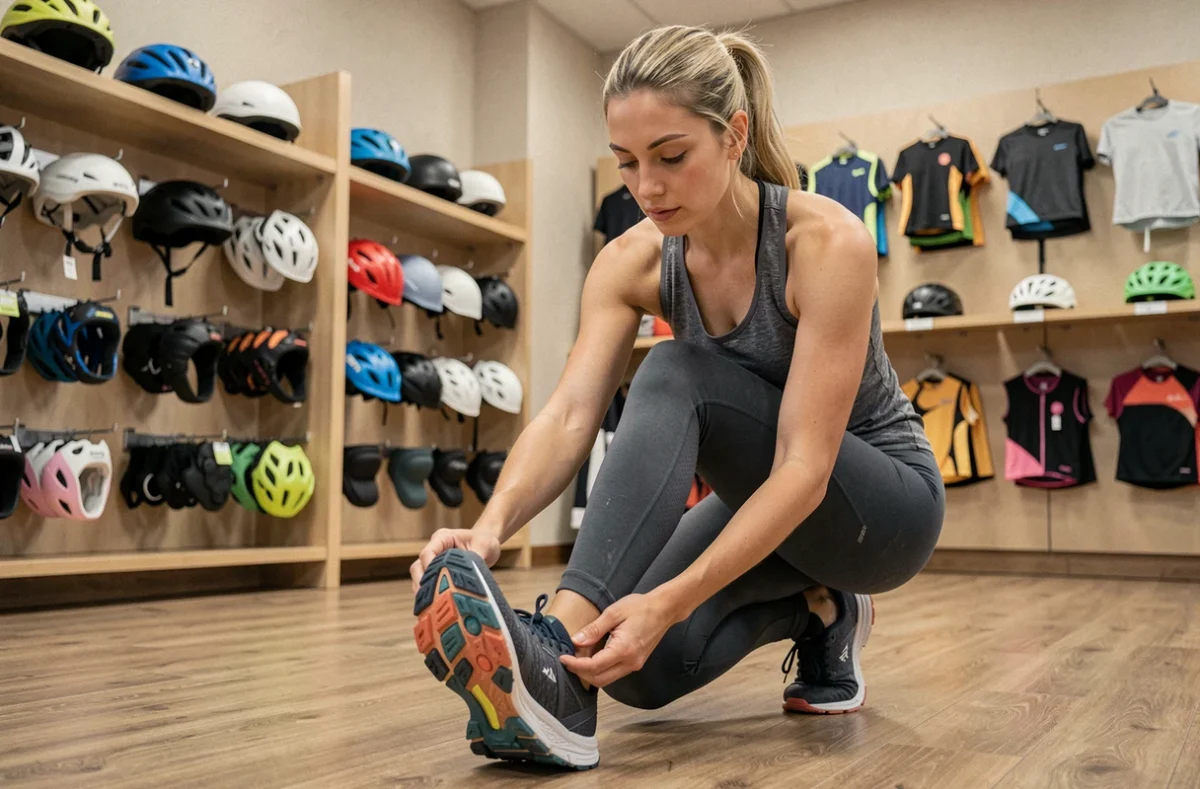
A knee that gives way due to a poorly fitting shoe, a fractured collarbone under a cracked helmet with no visible marks: most sports equipment-related injuries do not come from a spectacular accident, but from a poor initial choice. Choosing the right sports equipment for safe practice requires understanding a few technical criteria that are often overlooked.
Safety standards for sports equipment: what the CE marking doesn’t tell you
Have you ever noticed the CE mark on a bicycle helmet or a pair of shin guards? This marking means that the manufacturer declares compliance with European requirements. It does not guarantee that an independent laboratory has tested the product.
To know if a piece of equipment offers real protection, you need to look for the specific standard for the activity being practiced. A ski helmet and a bicycle helmet do not meet the same standard, even if both bear the CE marking. The standard is often printed inside the product or mentioned on the packaging, in the form of a code (letters and numbers).
Since December 13, 2024, the European regulation on general product safety (GPSR, EU Regulation 2023/988) strengthens the obligations of online sellers. Each offer must clearly identify the manufacturer and, when the manufacturer is located outside the European Union, a representative established in the EU. Applicable safety warnings must also appear on the product sheet. If this information is missing from a listing, it is a concrete warning sign even before looking at the price.
To compare references and check equipment on Y a du Sport, verifying these mentions on each product sheet becomes a useful reflex.
Bicycle helmets and protective equipment: why buying second-hand poses a real problem
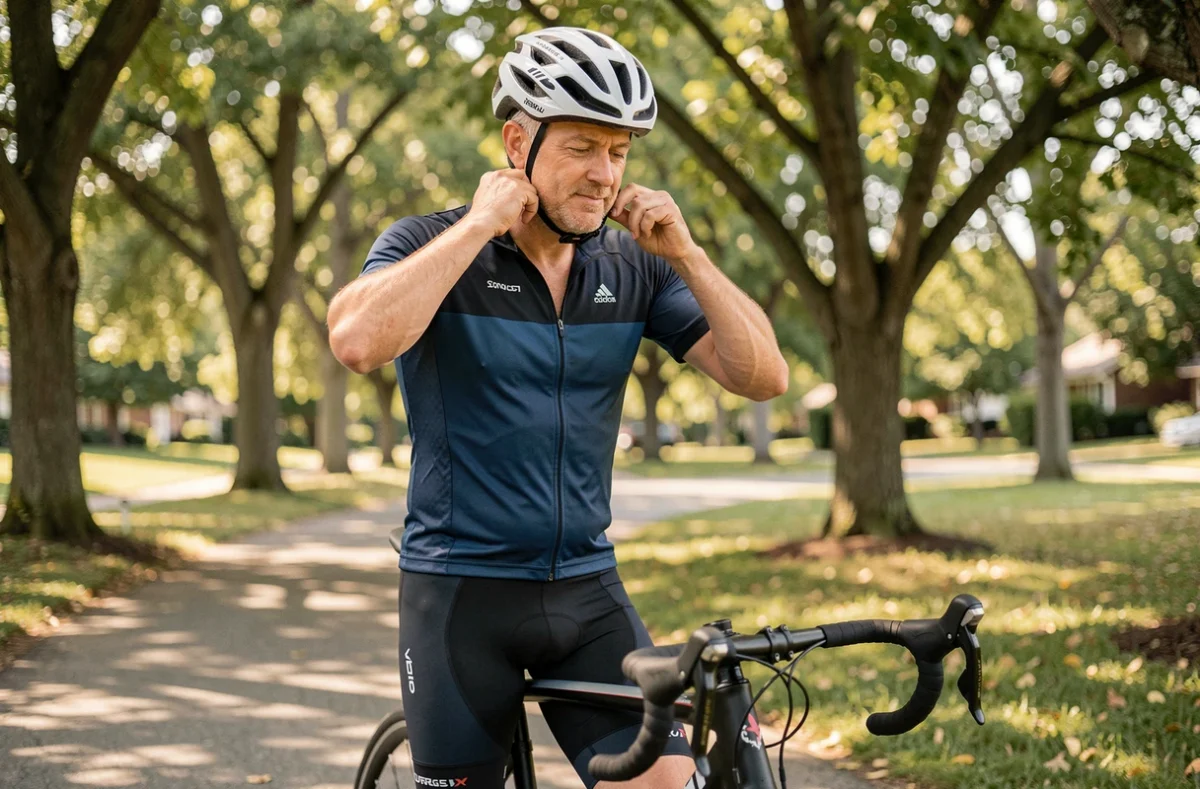
Buying a second-hand bicycle helmet seems logical from an economic and ecological standpoint. The problem is that a previous impact may have damaged the internal structure (the expanded polystyrene layer that absorbs impact) without leaving any visible marks on the outside.
ADEME considers that personal protective equipment should not be resold or given away for safety reasons. This includes bicycle helmets, ski helmets, climbing helmets, as well as back protectors and impact vests used in water sports.
In practice, this means three things:
- A helmet that has fallen from a head-height shelf may have sustained invisible damage. When in doubt, it should be replaced.
- A helmet with an unknown history (garage sale, donation, long-term loan) offers no guarantee of its remaining shock absorption capacity.
- Running or ski shoes, on the other hand, can be purchased second-hand if the sole and heel counter remain in good condition, as they do not serve the same protective role against impacts.
The distinction to remember: equipment designed to absorb shock should not be lent or resold. Equipment designed for comfort or support (shoes, technical clothing) can have a second life.
Sports shoes: fit and selection criteria based on practice
The choice of running, hiking, or indoor sports shoes has the most direct impact on the joints. Why? Because the foot is the first point of contact with the ground, and an unsuitable shoe alters the entire biomechanical chain up to the back.
Here are the criteria to check based on the sport practiced:
- For running: the drop (the height difference between the heel and the forefoot) should match your natural stride. A drop that is too high for a runner used to flat shoes can cause Achilles tendon pain.
- For hiking: the stiffness of the sole and the height of the upper protect the ankle on technical terrain. A low shoe is suitable for flat trails, not for rocky paths.
- For indoor sports (basketball, handball, badminton): the grip of the sole on smooth surfaces and lateral cushioning matter more than the weight of the shoe.
- For cycling: the stiffness of the sole ensures efficient power transfer and limits foot pain during long rides.
A common pitfall is choosing sports shoes half a size too small. The foot swells during exertion, and a shoe that fits well at rest becomes compressive after thirty minutes of activity. Trying on shoes at the end of the day, when the foot is slightly swollen, gives a better idea of actual comfort.
Checking the traceability of sports equipment online
Buying sports equipment on a marketplace exposes you to a risk that physical stores naturally limit: the lack of traceability. An online offer without an identifiable manufacturer name, without a standard mention, and without a designated European representative does not comply with the GPSR regulation.
Before finalizing a purchase, three checks take less than a minute. The manufacturer’s name must appear on the product sheet (not just the seller’s name). The applicable standard for the type of equipment must be mentioned. And if the manufacturer is based outside the EU, a representative established in the European Union must be identified in the listing.
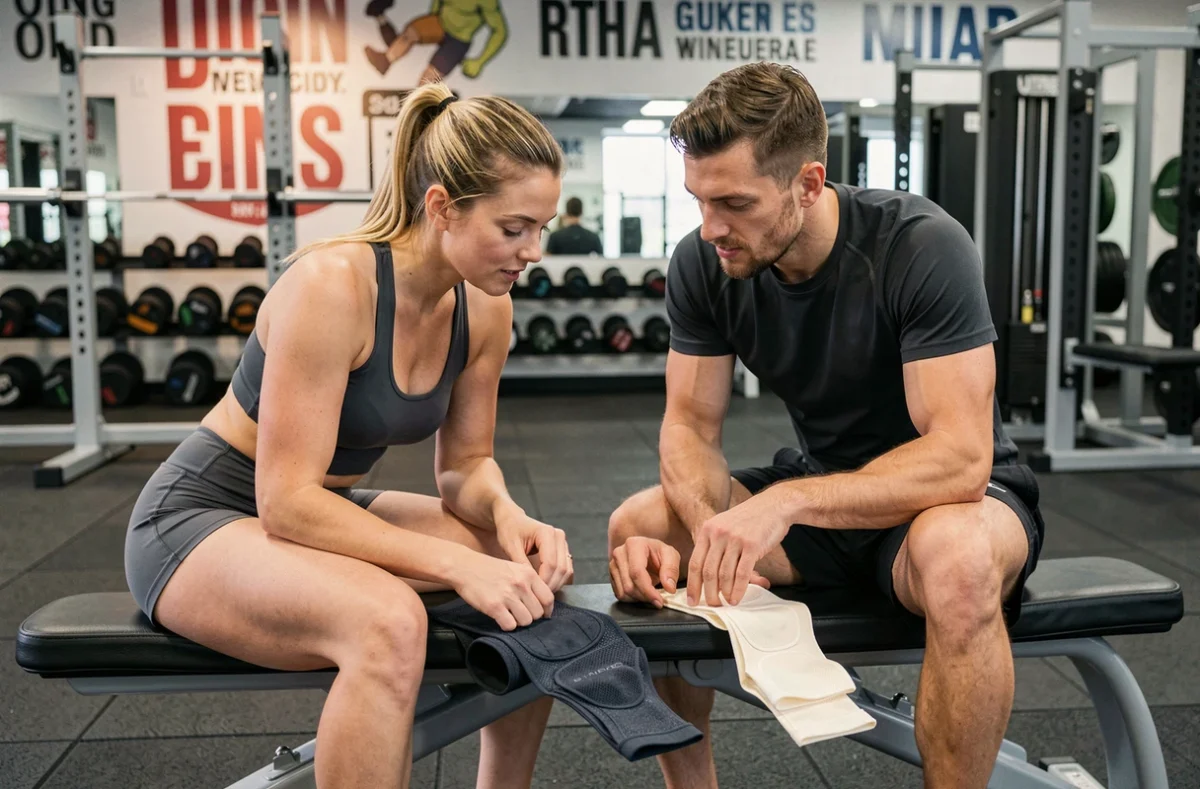
These obligations apply not only to large equipment. They also apply to accessories: joint protectors, sports glasses, visibility vests for cycling. An abnormally low price associated with the absence of these mentions should steer you towards another product.
Choosing sports equipment safely ultimately relies on simple checks: reading the standard before the price, refusing second-hand for anything that absorbs shock, and demanding traceability of the manufacturer on each online product sheet. These reflexes take a few seconds and prevent weeks of downtime.