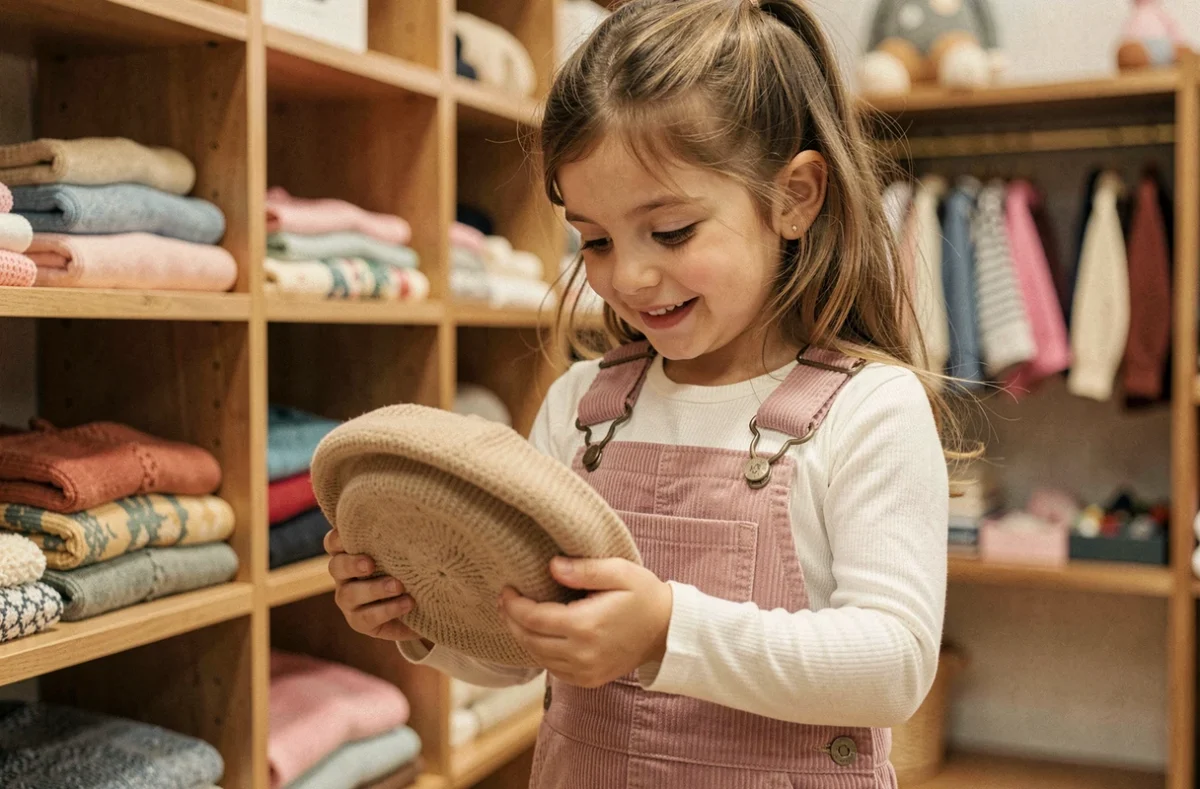
The children’s fashion market is undergoing a period of rapid transformation. The autumn-winter 2026 collections no longer just offer seasonal colors or reduced cuts from adult wardrobes. Behind the aesthetic choices, recent European regulatory constraints are reshaping how brands design, present, and sell their children’s pieces. This context is also changing parents’ purchasing criteria, who are now looking beyond just the visual aspect.
European Regulation and Children’s Fashion: What Changes in 2026
Since July 19, 2026, the European ban on destroying unsold clothing and shoes applies to large companies. For children’s fashion, where sizes quickly become obsolete and collections are renewed rapidly, this measure has direct effects on stock management.
Brands that used to produce large seasonal series must rethink their approach. Reselling, donating, or recycling unsold items is gradually replacing the logic of destruction. Some brands now favor shorter and better-calibrated series, even if it means giving up covering all sizes of the same model.
At the same time, Regulation (EU) 2024/1781 on the eco-design of sustainable products is preparing a digital product passport for textiles. The delegated act specific to clothing is tentatively scheduled for 2027, with a subsequent transition period. This digital traceability applied to children’s textiles will require brands to document the composition, origin, and environmental impact of each piece.
Parents consulting the Quand Je Serai Grande fashion site already find selections attentive to materials and sustainability, a reflex that takes on new meaning in light of these regulatory developments.
Eco-Claims on Children’s Clothing: A Stricter Legal Framework
Competing articles often mention organic cotton, certified fabrics, and eco-responsible approaches. What they do not address is the gradual tightening of the legal framework surrounding these claims.
Formulations like “eco-responsible collection” or “made with respect for the planet,” common in children’s fashion, will need to be backed by measurable data as European regulation becomes clearer.
For parents, this means that children’s clothing labels will gradually become more precise. Field reports vary on this point: some brands are already anticipating by displaying third-party certifications (GOTS, Oeko-Tex), while others continue to rely on vague terminology. The transition period will make label reading uneven from one brand to another for several seasons.
Materials and Comfort: What Autumn-Winter 2026 Trends Really Favor
Beyond the regulatory framework, this season’s collections showcase aesthetic and technical choices that deserve close examination.
Natural Fabrics and Cotton Gauze in Children’s Wardrobes
Organic cotton and cotton gauze remain very present in children’s ranges, including in autumn-winter pieces. Brands positioned in the high-end segment use these materials for dresses, shirts, and coordinated sets. The choice of natural fabric meets a concrete expectation: children’s skin reacts more to synthetic fibers, and parents are aware of this.
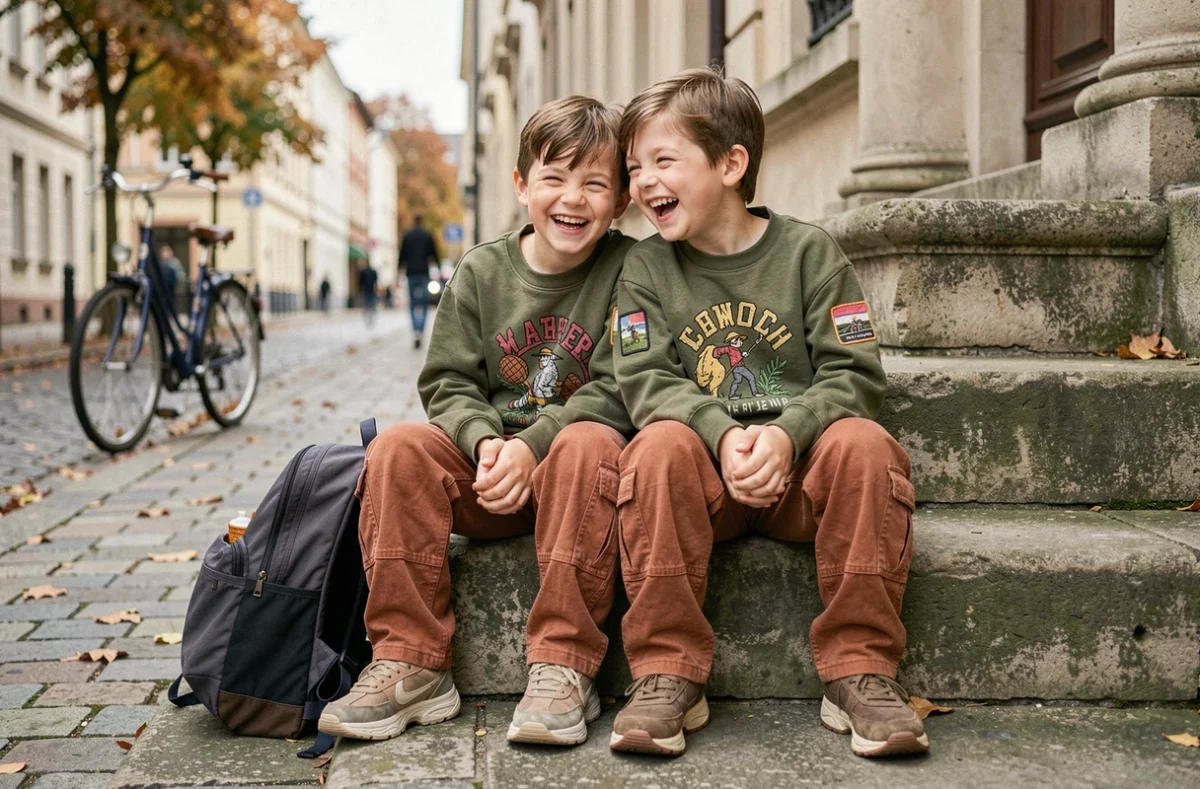
Suede and thick knit are also part of the season’s textures, often associated with autumnal palettes (burgundy, chocolate brown, fir green). These materials allow for structured pieces that withstand frequent washing, a criterion rarely highlighted in fashion articles but crucial for the actual lifespan of children’s clothing.
Silhouettes and Outfits That Work Daily
Coordinated sets (matching tops and bottoms) are gaining ground, particularly for both girls and boys. This trend has an obvious practical advantage: it simplifies daily dressing while offering a polished look.
Several elements characterize the favored pieces this season:
- Loose cuts at the shoulders and knees, allowing freedom of movement without sacrificing the overall fit of the garment
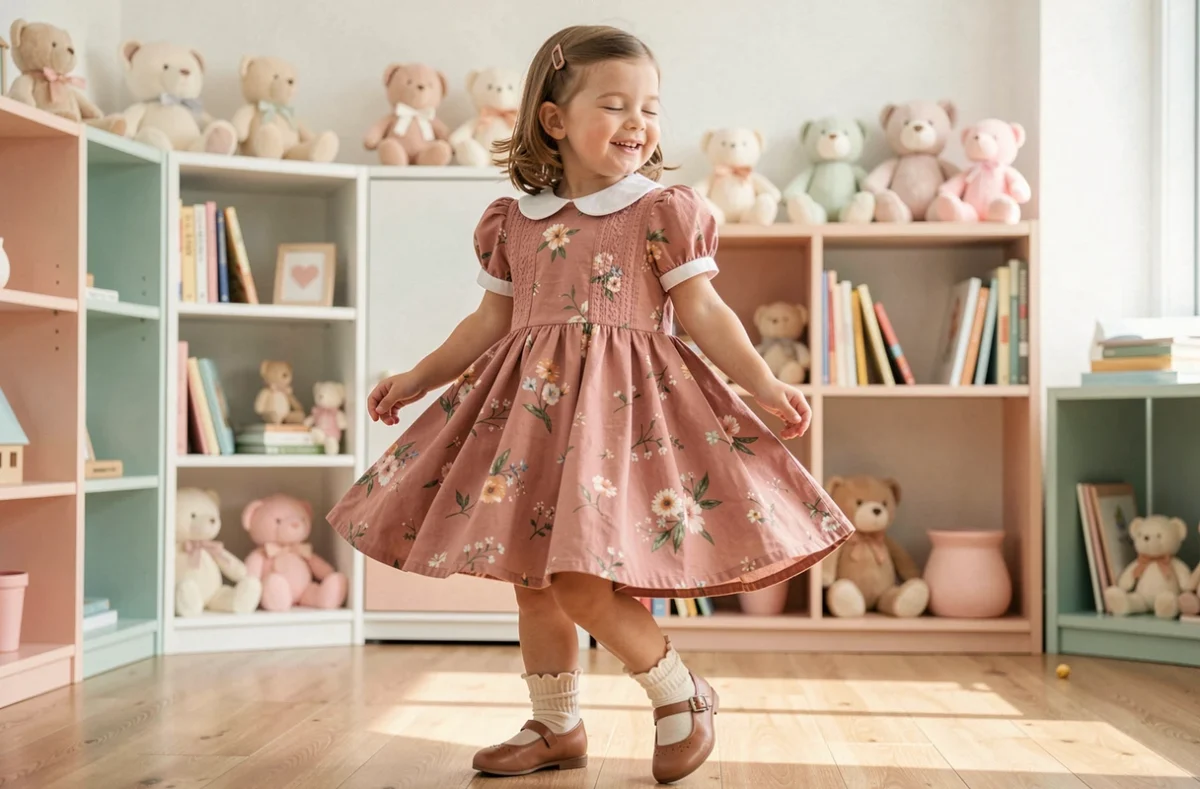
- Elaborate collars (Peter Pan collar, high collar) that add a chic touch without resorting to additional accessories
- Dresses in knit or corduroy, wearable from back-to-school until the end-of-year festivities, reducing the need to buy multiple seasonal pieces
Sustainable Children’s Wardrobe: Between Parental Intent and Market Reality
The idea of a more sustainable children’s wardrobe is widely circulated. The available data does not yet allow for measuring whether the ban on destroying unsold items has already changed production volumes or shelf prices. However, several signals converge.
Parents are more willingly purchasing versatile pieces that can be worn across multiple seasons. A thick cotton dress that transitions from autumn to spring with tights, a sturdy canvas short that can be reused year after year: these choices reflect a trade-off between budget and actual use.
The second-hand children’s market continues to grow, driven by the speed at which children change sizes. Brands that incorporate resale or take-back into their model are positioning themselves in a niche consistent with the new European obligations.
The autumn-winter 2026 collections for children thus reflect a dual movement. On one side, strong aesthetic proposals (deep colors, textured materials, crafted silhouettes). On the other, a regulatory framework pushing brands toward greater transparency and better-controlled volumes. The choice of children’s clothing is also becoming a choice of information, as labels and product sheets are enriched with verifiable data.