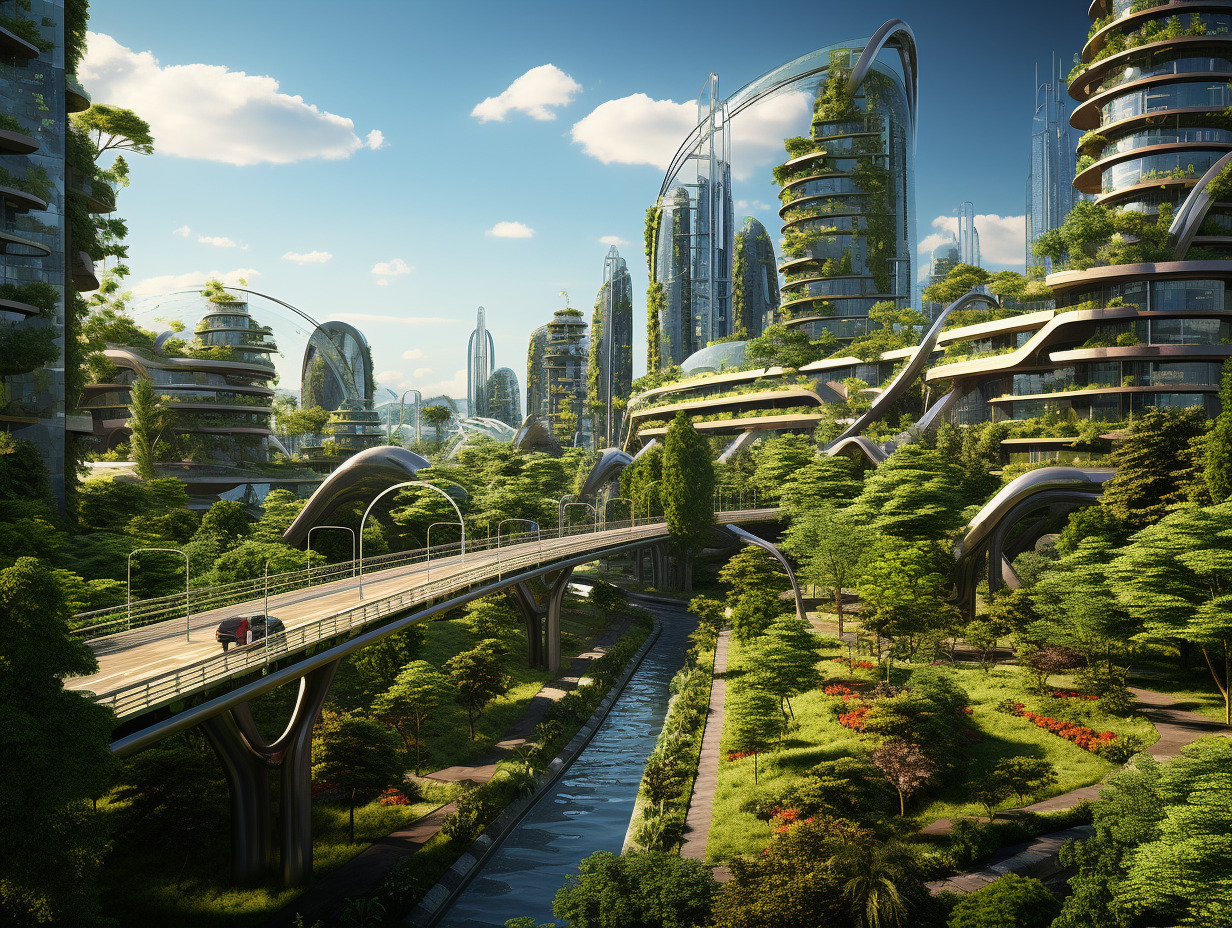
The habitat of the future is at the heart of current concerns, driven by the need to address environmental and technological challenges. Emerging trends reveal a quest for sustainability, energy efficiency, and harmonious integration with the environment. Innovations range from biophilic design, seeking to reconnect residents with nature, to advanced materials that reduce carbon footprints. Artificial intelligence and home automation are also transforming living spaces into responsive and adaptive environments. These advancements promise to reshape the face of urban and rural communities, creating homes that promote well-being while preserving the planet.
Technological Innovations for Sustainable Habitat
Builders are innovating to meet the expectations of a habitat of the future that combines environmental respect with resident comfort. From eco-friendly homes to green roofs, from green materials to water recovery systems, the construction of tomorrow’s buildings is part of a perspective of significant carbon footprint reduction. JD Mag reveals that energy savings are at the core of the construction process, resulting in homes that are not only sustainable but also economical.
The smart home, equipped with solar sensors and connected outlets, perfectly illustrates this vision of a connected and responsible habitat. Connected devices, integrated into these living spaces, allow for the control and optimization of energy consumption. Start-ups are also in the game, with some creating devices capable of detecting energy-hungry equipment to offer tailored solutions for reducing energy expenses.
Today’s technologies are thus shaping the houses of the future, which will be more than just places to live. They will adapt to societal and environmental changes, anticipating the needs of residents while preserving the environment. Energy management systems and innovative building materials play a key role in this evolution. Moreover, technological innovations pave the way for a new paradigm of habitat. Living spaces are becoming smart, responsive, and suited to a lifestyle that aims to be both connected and in harmony with the environment. The housing of the future, through its architecture and integrated systems, reflects an aspiration for a better life, where technology serves sustainability and well-being.
Rethinking Living Space: Modularity, Sharing, and New Functions
The concept of habitat is transforming, driven by a need for adaptability to evolving lifestyles. In this context, the modularity of spaces becomes a response to environmental and demographic challenges such as an aging population. Rooms that transform and walls that move characterize the homes of tomorrow, promoting optimized space usage and better resource management.
Technology is making its way into homes, transforming interior equipment into smart tools. Mirrors that can recommend outfits, windows that adjust their opacity, or refrigerators that manage food stocks, each element contributes to increased security and task automation. These advancements reflect a connected habitat, where comfort and energy efficiency come together to simplify daily life.
Environmental challenges also dictate a radical transformation in building design. The wood sector, for example, illustrates the rise of responsible construction, favoring materials with low environmental impact such as flax, hemp, or straw. The Minister of Housing, Emmanuelle Wargon, emphasized this direction in her initiative “Living in France of Tomorrow,” advocating for quality housing that is accessible and environmentally friendly.
In the face of the health crisis and climate change, urban density requires innovative solutions. Housing accessibility remains a priority, as does the need to address the challenges of an aging population. Homes must not only be flexible and connected but also designed to promote sharing and community, thus redefining the very notion of living space.