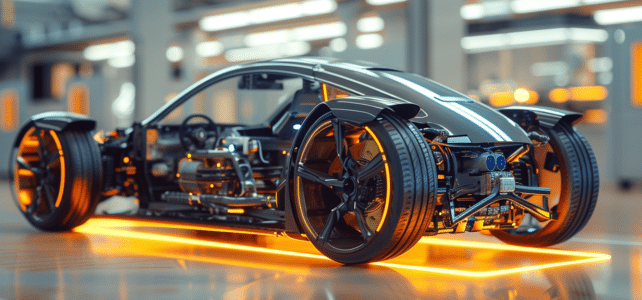
In the automotive world, all-wheel drive (AWD) is synonymous with performance and safety, providing better grip in varied driving conditions. Over the years, this technology has significantly evolved, transitioning from robust mechanical systems to sophisticated electronic solutions. Manufacturers are constantly innovating, seeking to improve energy efficiency, responsiveness, and driving dynamics. Recent advancements incorporate intelligent control strategies and lightweight components, aiming to optimize the driving experience while reducing environmental impact. These progressions are shaping the industry and defining a new era for four-wheel-drive vehicles.
Evolution and Advances in All-Wheel Drive Technologies
The all-wheel drive system is undergoing a silent yet decisive revolution. Automotive retrofitting, as the process of adding new technologies to existing vehicles, is becoming a key player in modernizing vehicles, particularly those targeted by age but also by the need to meet demanding environmental standards. This approach goes beyond simply adding basic features; it involves a profound transformation, including the integration of electric propulsion systems, thus transmuting old cars into models of environmental performance.
Suzuki, a brand known for its expertise in 4×4 vehicles, is investing in these retrofitting technologies to give a second life to its Suzuki 4×4 models. By developing technological innovations, the manufacturer not only enhances the energy efficiency and safety of its vehicles but also reduces CO2 emissions. These new features, arising from retrofitting, manifest through software packages integrating artificial intelligence, the Internet of Things, and assisted driving, promising a renewed driving experience.
At the heart of this modernization, the retrofitting software positions itself as a technological solution that allows for the marriage of current requirements with the mechanical heritage of vehicles. It represents a blend of tradition and modernity, conservation and innovation, where electric propulsion systems facilitate a smooth transition towards the electrification of all-wheel-drive vehicles.
Suzuki’s commitment to sustainability is also reflected in its offering of hybrid vehicles, which combines its know-how in 4×4 technology with contemporary ecological imperatives. The impact of these innovations is measured not only in terms of road performance but also in their contribution to a sustainable environment. Take, for example, BMW’s renowned xDrive system: it perfectly illustrates the ongoing quest for optimization in the dynamic distribution of torque between axles, a pursuit shared by many industry players.
In this context, all-wheel drive is no longer merely a matter of power or control but becomes a vector for ecological responsibility. The 4×4 technology, akin to the advancements made by Suzuki, demonstrates that performance and environmental preservation can coexist, paving the way for a future where sporty driving aligns with environmental consciousness.

Impact and Future of Innovations in All-Wheel Drive
Automotive sustainability is now firmly on the agenda of manufacturers with renewed urgency. Suzuki, renowned for its 4×4 vehicles, adheres to this trend and offers a range of hybrid systems, attesting to its commitment to a greener future. These hybrid technologies, combining electric and thermal propulsion, reconcile the performance sought by off-road enthusiasts with greater environmental responsibility. The brand thus positions itself as a reference in the 4×4 market, translating into action the promise of more ecosystem-friendly mobility.
The impact of innovations in all-wheel drive is not limited to the new vehicle segment. Automotive retrofitting, through the introduction of electric propulsion systems in existing vehicles, opens a promising path towards reducing greenhouse gas emissions. These transformations, which are part of a modernization effort, give a second youth to older vehicles, aligning them with current standards of energy efficiency and safety.
Look towards the future of all-wheel drive, and you will see a technology that no longer merely provides optimal grip on all surfaces. It becomes the spearhead of integrated automotive design, where energy efficiency and carbon footprint reduction dictate new directions. Hybrid technologies, in particular, are positioned as appealing alternatives for drivers eager to combine driving pleasure with environmental ethics.
The transition to more sustainable 4×4 vehicles relies on a delicate balance between technical innovation and economic viability. Suzuki, in its quest to harmonize these two imperatives, offers a development model where environmental performance is a continuation of its expertise in all-wheel drive. The brand’s hybrid systems are not just a response to ecological challenges; they are the manifestation of a long-term vision, where technological progress goes hand in hand with the preservation of our planet.